


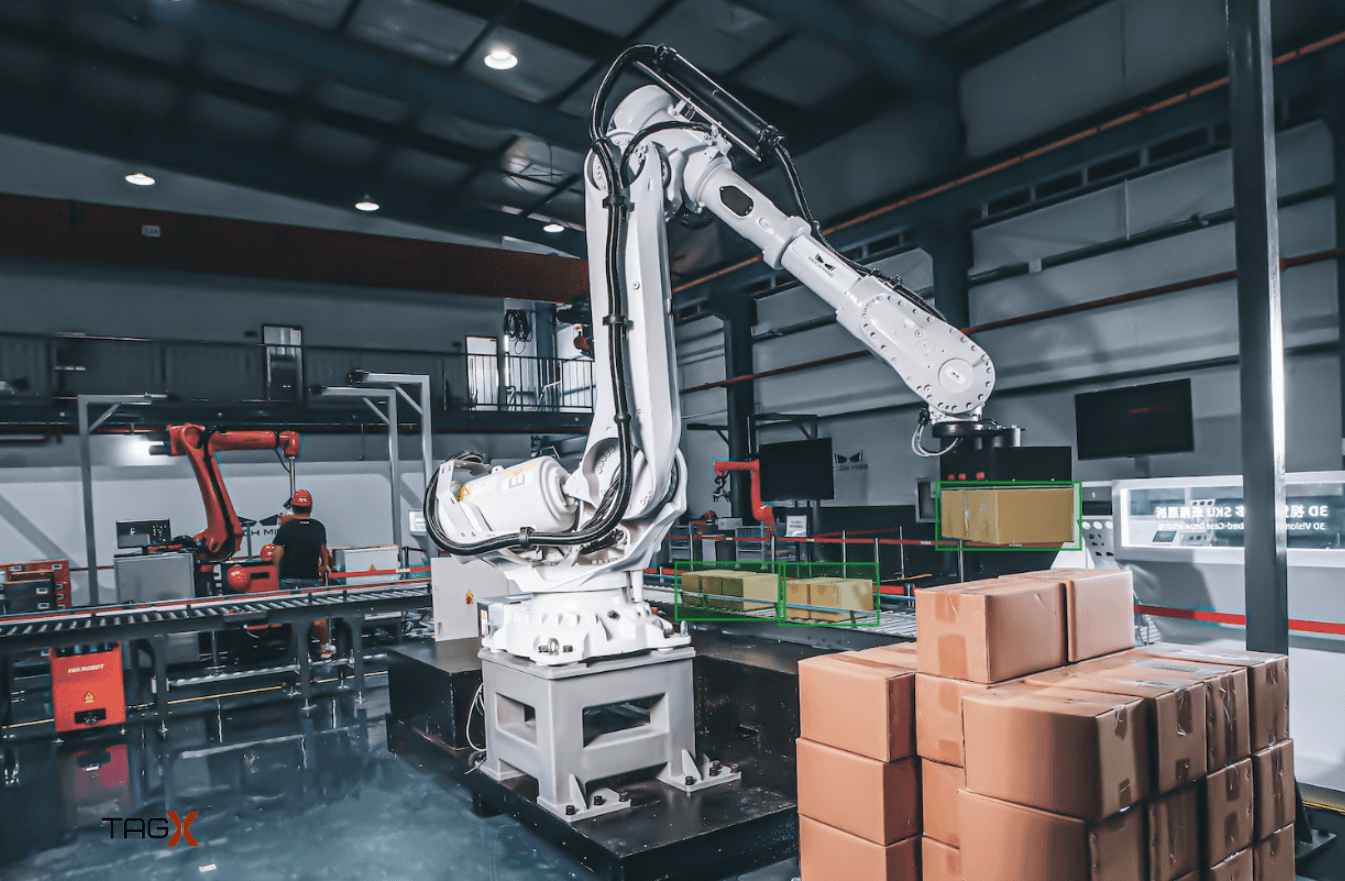
The manufacturing industry is entering a new era of AI-powered automation, where smart technologies are reshaping how factories operate. From predictive maintenance to real-time quality inspection, AI in manufacturing is enabling businesses to achieve higher efficiency, reduce costs, and improve product quality. At the foundation of this transformation is data annotation, which ensures that AI systems receive accurate, well-labeled data to deliver reliable outcomes.
What is Industrial Automation?
Industrial automation is the use of technology to control, monitor, and optimize manufacturing processes. It integrates robotics, sensors, and intelligent software to replace repetitive manual tasks, improve accuracy, and enhance workplace safety.
With the rise of AI and machine learning, industrial automation has gone beyond basic robotics. Today, it involves smart factories where machines communicate, analyze data, and make decisions in real time. The result is faster production cycles, reduced errors, and greater operational efficiency.
Why Use AI in Manufacturing?
AI is rapidly becoming the backbone of modern manufacturing automation. By analyzing massive datasets from production lines, AI can detect anomalies, optimize workflows, and provide predictive insights that humans alone cannot achieve.
Key benefits of adopting AI in manufacturing include:
- Improved Accuracy: AI algorithms enhance quality and precision by identifying patterns with high reliability.
- Enhanced Efficiency: AI-powered systems work continuously without fatigue, boosting overall productivity.
- Reduced Costs: Automating manual processes lowers labor expenses and increases profitability.
- Better Safety: AI monitoring systems detect potential hazards and alert operators to prevent accidents.
- Increased Speed: AI processes information much faster than humans, enabling rapid decision-making.
By leveraging these benefits, manufacturers can stay competitive and future-ready in an increasingly digital world.
TagX helps manufacturers unlock the power of AI through precise and scalable data annotation.
Use Cases of AI in Manufacturing
The applications of AI in manufacturing and industrial automation are vast and growing every day. Below are the most impactful use cases:
AI for Quality Control
AI-powered vision systems inspect products in real time, identifying defects with high accuracy. This improves product consistency, reduces waste, and ensures customer satisfaction.
Supply Chain Optimization with AI
AI analyzes logistics and inventory data to streamline material flow, forecast demand, and reduce inefficiencies across global supply chains.
Predictive Maintenance in Manufacturing
By monitoring equipment performance and analyzing sensor data, AI predicts when machines will fail. This proactive approach minimizes downtime and lowers repair costs.
Process Optimization in Manufacturing
AI identifies bottlenecks in production and suggests process improvements to increase throughput, reduce waste, and maximize efficiency.
Personalized Product Customization
Manufacturers can use AI to tailor products to individual customer preferences, offering unique value and building brand loyalty.
Energy Management in Factories
AI tracks and analyzes energy consumption across machines, recommending strategies to reduce costs and promote sustainable operations.
Role of Data Annotation in Manufacturing AI
AI systems are only as good as the data they are trained on. This is where data annotation for manufacturing plays a crucial role. By labeling datasets such as images, sensor readings, and production logs, annotation ensures AI algorithms can recognize patterns and make accurate predictions.
Examples include:
- Quality Control: Annotated product images train AI to detect defects automatically.
- Supply Chain Management: Labeled logistics data helps AI forecast demand and optimize material flow.
- Predictive Maintenance: Annotated equipment history data improves failure prediction models.
- Process Optimization: Annotated machine and material data guide AI in streamlining workflows.
- Customization: Annotated customer preference data enables AI to suggest personalized product variations.
- Energy Efficiency: Annotated energy usage data helps AI optimize consumption and sustainability.
Without accurate data annotation, even advanced AI systems cannot deliver precise, real-world results in industrial automation.Future-proof your industrial automation—partner with TagX for high-quality data annotation.
Conclusion
The future of AI in manufacturing lies in the combination of automation, predictive intelligence, and data annotation. From smart quality inspection to predictive maintenance and energy optimization, AI is making factories more intelligent, efficient, and sustainable.
As industries continue to evolve, businesses that embrace AI-driven automation with TagX today will lead the way in shaping the factories of tomorrow. With TagX’s expertise in data annotation, manufacturers can ensure their AI systems are accurate, reliable, and future-ready.