


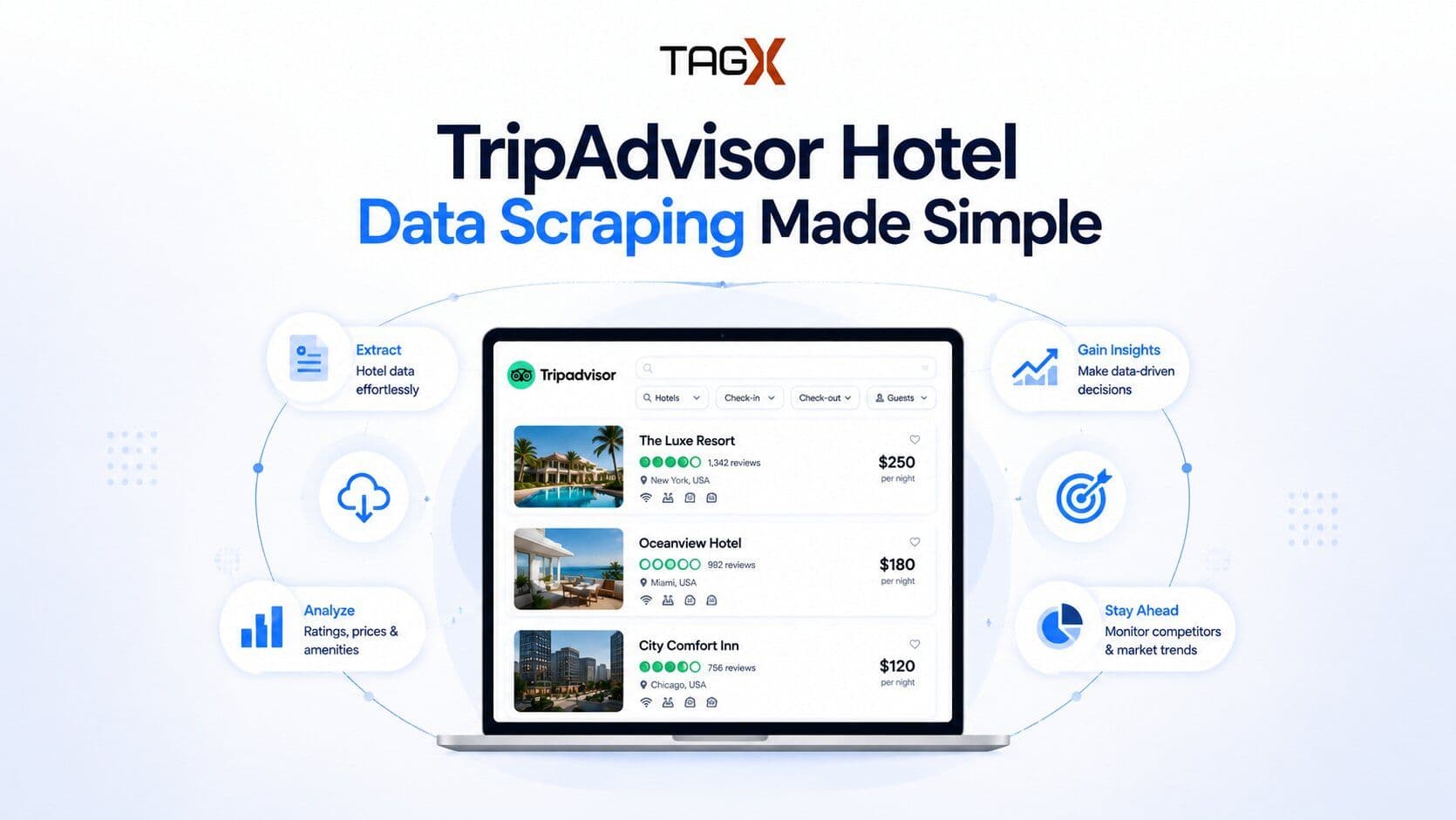
TripAdvisor is one of the world's largest travel platforms, featuring millions of hotel listings, traveler reviews, ratings, amenities, and destination insights. For travel agencies, hospitality businesses, market researchers, and travel technology companies, this publicly available information offers a valuable source of market intelligence.
Whether you're comparing hotel performance, analyzing guest sentiment, or tracking hospitality trends across destinations, having access to structured TripAdvisor data can help support more informed decisions. However, manually collecting this information is both time-consuming and difficult to scale, making web scraping the preferred approach for many organizations.
That said, building and maintaining a TripAdvisor scraper isn't always straightforward. Dynamic page content, frequent website updates, pagination, and anti-bot protections can quickly turn a simple scraping project into an ongoing engineering challenge.
In this guide, you'll learn how to scrape TripAdvisor hotel and review data efficiently, what information you can collect, the challenges to consider, and how businesses can streamline the process using a scalable data collection solution.
How the TripAdvisor Data Collection Process Works
Whether you're collecting data for analytics, research, or travel applications, these five steps provide a simple and scalable workflow.
Step 1: Define the Data You Need
The first step is identifying the information required for your use case. Different projects rely on different datasets, so it's important to determine which hotel attributes and review data will provide the most value.
For example, a travel comparison platform may prioritize hotel details, ratings, amenities, and pricing indicators, while a hospitality analytics company may focus on review history, traveler sentiment, and property rankings over time.
Step 2: Choose the Data You Want to Collect
Once you've identified your use case, the next step is deciding which TripAdvisor data is most relevant to your project. Rather than collecting every available field, focus on the information that supports your business objectives.
For example:
- Travel agencies may prioritize hotel ratings, amenities, and review summaries to compare accommodation options.
- Market research firms often collect review history and traveler sentiment to identify trends across destinations.
- Hospitality businesses may focus on competitor reviews, rankings, and guest feedback to benchmark their properties.
- Travel technology platforms typically integrate hotel details, location data, and reviews into search or recommendation engines.
With TagX, you can request structured datasets tailored to your specific requirements, reducing unnecessary data processing and simplifying integration
Step 3: Retrieve Structured TripAdvisor Data
Once your data requirements have been defined, the next step is collecting and organizing the required TripAdvisor information from publicly available sources.
Rather than working with raw HTML or manually parsing web pages, the data can be extracted and structured into formats that are ready for analysis. This may include:
- Hotel information and property details
- Ratings and review counts
- Guest reviews and review dates
- Amenities and facilities
- Traveler categories
- Hotel rankings
- Pricing indicators (where publicly available)
Receiving the data in a structured format simplifies integration with analytics platforms, databases, dashboards, and other business applications while reducing the need for extensive data cleaning.
Step 4: Integrate the Data into Your Workflow
Once the data has been collected, it can be integrated into your existing business processes and applications.
Depending on your objectives, businesses commonly use TripAdvisor data to:
- Populate travel search and booking platforms
- Build hotel comparison tools
- Monitor competitor performance
- Analyze customer sentiment
- Generate hospitality market research reports
- Support AI and machine learning models
When delivered in structured formats such as JSON or CSV, the data can be incorporated into existing systems with minimal preprocessing, allowing teams to focus on analysis and product development.
Step 5: Automate Data Collection
TripAdvisor data is constantly evolving as hotels receive new reviews, update amenities, adjust property information, and attract new traveler feedback. While one-time data collection may be suitable for individual research projects, businesses often require regularly updated datasets to stay informed.
Automating the data collection process ensures your datasets remain current without the need for repeated manual scraping. Regular updates make it easier to monitor hotel performance, track customer sentiment, identify market trends, and maintain reliable travel datasets over time.
What Insights Can TripAdvisor Data Provide?
When organized into structured datasets, TripAdvisor information becomes much more than hotel listings. It can help businesses answer questions such as:
- Which hotels consistently receive the highest guest ratings?
- How has customer sentiment changed over time?
- What amenities are most common among top-rated hotels?
- Which destinations experience seasonal spikes in reviews and bookings?
- How do competing hotels compare within the same market?
- Which traveler segments leave the most positive or negative feedback?
These insights help travel businesses improve decision-making across marketing, pricing, customer experience, and product development.
Common Use Cases for Scraped TripAdvisor Data
TripAdvisor data supports a wide range of applications across the travel and hospitality industry.
Hotel Benchmarking
Compare hotels across destinations using ratings, amenities, review volume, and property rankings to understand how they perform relative to competitors.
Customer Sentiment Analysis
Analyze thousands of guest reviews to identify common themes, measure customer satisfaction, and uncover areas for service improvement.
Market Research
Monitor travel trends across cities, regions, or countries to understand changing traveler preferences and emerging hospitality markets.
Demand Forecasting
Historical review activity and hotel data can help businesses identify seasonal booking patterns, forecast demand, and support pricing strategies.
AI-Powered Travel Applications
Structured hotel and review datasets can be used to train recommendation engines, enhance travel search experiences, and support intelligent travel planning tools.
Why Choose TagX for TripAdvisor Data Collection?
Building a TripAdvisor scraper may seem like a cost-effective option initially, but maintaining it over time can become increasingly complex. Frequent website updates, dynamic content, anti-bot protections, and large-scale data collection all require ongoing engineering effort, making DIY scraping difficult to sustain.
TagX eliminates these challenges by providing reliable access to structured TripAdvisor data through Hotel API. Instead of spending time maintaining scraping infrastructure, your team can focus on analyzing data, developing travel applications, and making informed business decisions.
With TagX, you benefit from:
- No scraper maintenance – We handle data collection and infrastructure so you don't have to manage scraper updates.
- Reliable, structured data – Receive clean hotel, review, and property data that's ready for analytics, reporting, or application development.
- Scalable data collection – Collect data across thousands of hotels and destinations without worrying about infrastructure limitations.
- Faster implementation – Access the data you need quickly instead of investing weeks or months in building and maintaining custom scrapers.
- Flexible delivery options – Consume data through APIs or receive custom datasets in formats such as JSON or CSV based on your workflow.
Whether you're building a travel platform, monitoring hotel performance, conducting hospitality research, or training AI models, TagX provides the structured travel data needed to support data-driven decision-making at scale.
Ready to Access TripAdvisor Data? Contact TagX today to discuss your data requirements and discover the right solution for your business.