


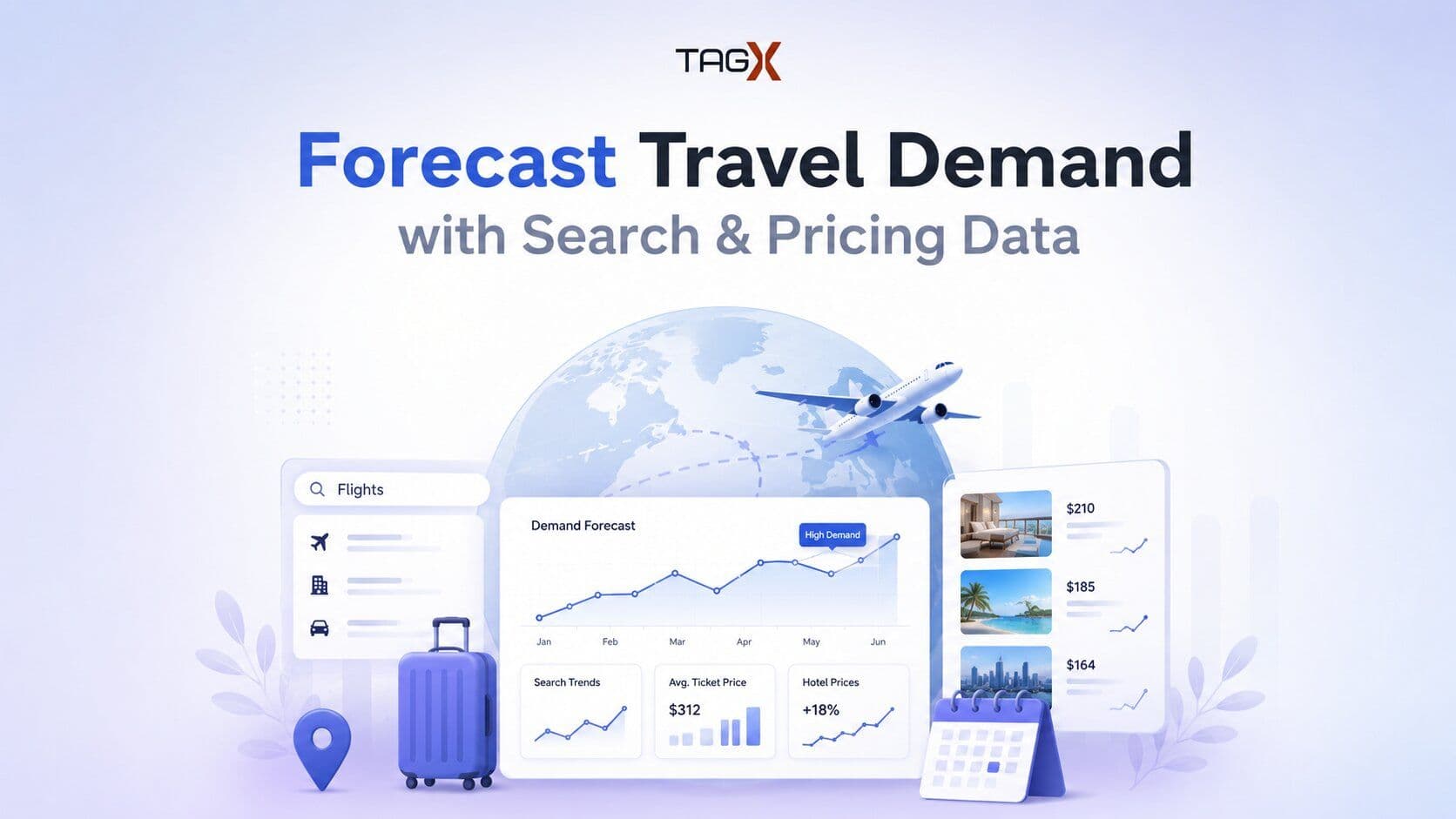
Travel demand isn't static—it shifts with every holiday, event, season, and travel trend. As demand changes, so do hotel prices, room availability, and booking patterns.
By analyzing public data from Expedia, Agoda, and other major OTAs, businesses can track these changes in real time. From search trends and nightly rates to review scores and room availability, this data provides a clearer view of market demand.
This guide explains which data points matter most and how they support better demand forecasting.
What Is Travel Demand Analysis?
Travel demand analysis is the process of examining public travel data to understand how traveler demand changes across destinations, seasons, and booking periods. Instead of relying on a single metric, businesses analyze multiple demand signals—including search activity, hotel availability, room rates, review scores, and inventory levels—to build a more complete picture of the market.
Looking at these signals together helps distinguish genuine demand shifts from short-term fluctuations. For example, increasing search activity alongside rising room prices and declining availability often indicates growing traveler demand.
These insights enable businesses to improve demand forecasting, optimize pricing strategies, monitor destination performance, and make more informed planning decisions.
Why Seasonal Demand Forecasting Matters in Travel
Travel demand changes throughout the year, influenced by factors like holidays, local events, weather, and traveler preferences. By monitoring these patterns early, businesses can better forecast demand, adjust pricing, and plan inventory across different destinations.
Changing Traveler Behavior
Travel preferences vary by season, with families, business travelers, and leisure travelers booking at different times and for different reasons.
Holidays & Festive Seasons
Long weekends and holiday periods often lead to higher hotel searches, increased bookings, and rising room rates.
Local Events
Conferences, concerts, sports events, and festivals can create temporary demand spikes in specific cities or regions.
Weather Patterns
Seasonal weather influences where and when people travel, impacting room availability and pricing across destinations.
Booking Windows
Advance booking trends change throughout the year, helping businesses anticipate demand before peak travel periods.
Business vs. Leisure Travel
Business destinations often see weekday demand, while leisure destinations experience stronger demand during weekends and holiday seasons.
What Data Points Reveal Seasonal Demand?
Seasonal demand is influenced by multiple data signals, not just hotel pricing. By analyzing different datasets from Expedia, Agoda, and other major OTAs, businesses can better understand traveler behavior and changing market trends.
- Daily room rates: Nightly prices, discounts, promotions, and price changes by date.
- Room availability & rate calendars: Available inventory, date-wise pricing, seasonal rate changes, and minimum stay requirements.
- Search trends: Destination searches, hotel search volume, and traveler interest over time.
- Review scores & review volume: Overall ratings, recent reviews, and guest activity trends.
- Cancellation policies: Free cancellation windows, refund policies, and booking restrictions.
Together, these data points provide a clearer view of seasonal demand, helping businesses forecast trends and respond to changing market conditions.
How Businesses Use OTA Data Throughout the Year
Seasonal travel trends create opportunities throughout the year, from peak holiday periods to quieter off-seasons. By analyzing OTA data consistently, businesses can improve planning, pricing, and market decisions.
Holiday Planning
Monitor hotel prices, room availability, and booking activity before holidays, festivals, and long weekends to anticipate demand and prepare inventory accordingly.
Optimize Pricing Strategy
Compare room rates across destinations and travel platforms to understand seasonal pricing trends and adjust pricing based on changing market conditions.
Forecast Occupancy
Analyze availability, booking windows, and demand signals to estimate occupancy levels and support revenue management decisions.
Competitive Benchmarking
Track competitor pricing, review scores, room availability, and property offerings to understand market positioning and identify opportunities.
Monitor Destination Demand
Compare traveler interest, pricing, and hotel availability across cities or regions to identify high-demand destinations and emerging travel markets.
Support Expansion Planning
Evaluate market demand, pricing trends, and property data before launching services, expanding into new regions, or targeting new travel markets.
Example of Seasonal Signals in OTA Data
No single data point tells the full story of market demand. When pricing, availability, booking behavior, and guest activity are analyzed together, businesses can better understand seasonal trends and make more informed forecasting decisions.
| Data Point | Low Season | Peak Season | Business Insight |
|---|---|---|---|
| Average nightly rate | Lower prices | Higher prices | Adjust pricing strategy |
| Available inventory | High availability | Limited availability | Estimate occupancy levels |
| Booking lead time | Short booking window | Longer booking window | Improve demand forecasting |
| Cancellation policies | More flexible | Less flexible | Monitor booking behavior |
| Review activity | Fewer new reviews | Higher review volume | Measure guest activity |
| Room type availability | Most room categories available | Premium rooms sell out first | Understand traveler preferences |
Challenges of Collecting Travel Demand Market Analysis Data
Collecting travel demand data from multiple OTAs isn't just about extracting hotel listings. The data changes frequently, varies across platforms, and requires continuous monitoring to maintain accuracy.
- Multiple OTA formats: Every travel platform structures hotel listings, pricing, and property information differently.
- Frequently changing hotel pages: Layouts, page elements, and data fields are regularly updated, making data collection more complex.
- Pagination: Large destinations can span hundreds or thousands of listings across multiple pages.
- Regional variations: Pricing, currencies, languages, taxes, and available properties often differ by country or region.
- Duplicate listings: The same property may appear multiple times across different OTAs, requiring accurate matching and deduplication.
- Data normalization: Room types, amenities, policies, and pricing formats need to be standardized before analysis.
- Frequent pricing updates: Hotel rates and availability can change several times a day, requiring regular data refreshes.
Building reliable travel demand datasets requires collecting, standardizing, and continuously updating data from multiple sources to ensure consistent and actionable insights.
Streamline OTA Data Collection with TagX
TagX Travel Data API provides structured travel data from Expedia, Agoda, and other major OTAs—covering pricing, availability, reviews, room types, and more—so businesses can focus on analysis instead of data collection.
With TagX, you can access:
- Hotel prices, rate calendars, and availability
- Room types, amenities, and property details
- Review scores and guest feedback
- Cancellation policies and booking information
- Geographic and destination-level data
- Custom travel datasets delivered via API or data feeds
Whether you're building demand forecasting models, monitoring travel markets, supporting revenue management, or conducting competitive research, TagX delivers reliable travel data that's ready for analysis.