

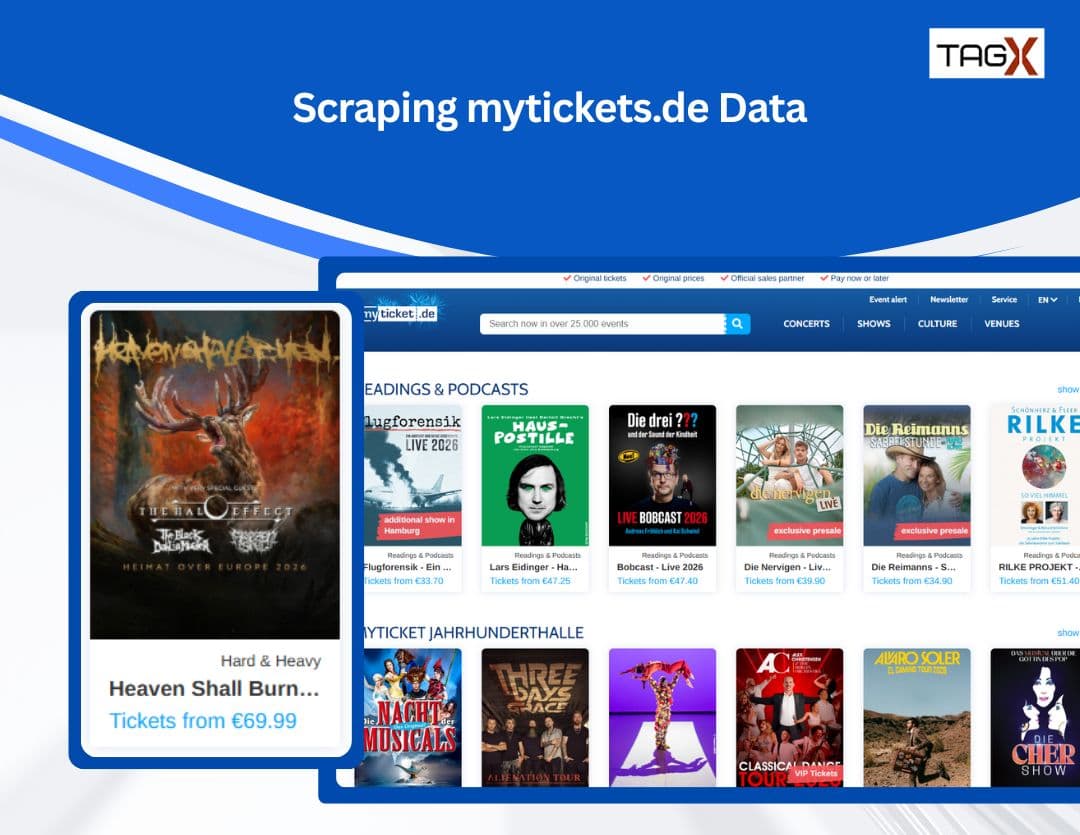
In recent years, online ticket sales have grown fast across the world. Industry reports show that digital event ticket sales in Europe continue to rise each year as more people book concerts, sports events, and live shows online. Global event and ticketing platforms now bring together thousands of events in one place, making it easy for users to search by city, date, or category. This shift has changed how people discover events and how businesses track what audiences want.
As online event ticket purchases grow in Europe, competition between event organizers and sellers has increased. Prices can change often, popular events sell out quickly, and new listings appear every day. Because of this, understanding event listings, pricing, and availability is more important than ever. Many companies choose to scrape mytickets.de to collect clear and organized event data. When businesses scrape mytickets.de, they can turn public listings into structured insights that help them study demand, compare prices, and plan smarter strategies based on real market activity.
Types of Event and Ticket Data You Can Collect
Structured event data is very valuable for businesses. It helps companies see trends, compare events, and plan strategies based on real information. By collecting clear and organized data, businesses can save time and make smarter decisions. Event data scraping plays a key role in this process, allowing companies to turn scattered event listings into easy-to-use datasets.
Some of the most common data collected from ticketing platforms include:
- Event titles and categories: Know the type of event and its main theme.
- Dates, times, and locations: Understand when and where events are happening.
- Ticket price ranges: Track cost differences and plan pricing strategies.
- Venue and organizer details: Identify who is hosting and where.
- Availability indicators: See if tickets are sold out or still available.
When all this information is organized in a clear format, businesses can easily compare events, spot trends, and make data-driven decisions. Structured datasets make analyzing large amounts of event information faster and more accurate, giving teams a clear view of the market.
Read more: Vseinstrumenty Scraper: How to Collect Product Prices, Reviews, and Listings
How to Scrape mytickets.de Event Data Step by Step
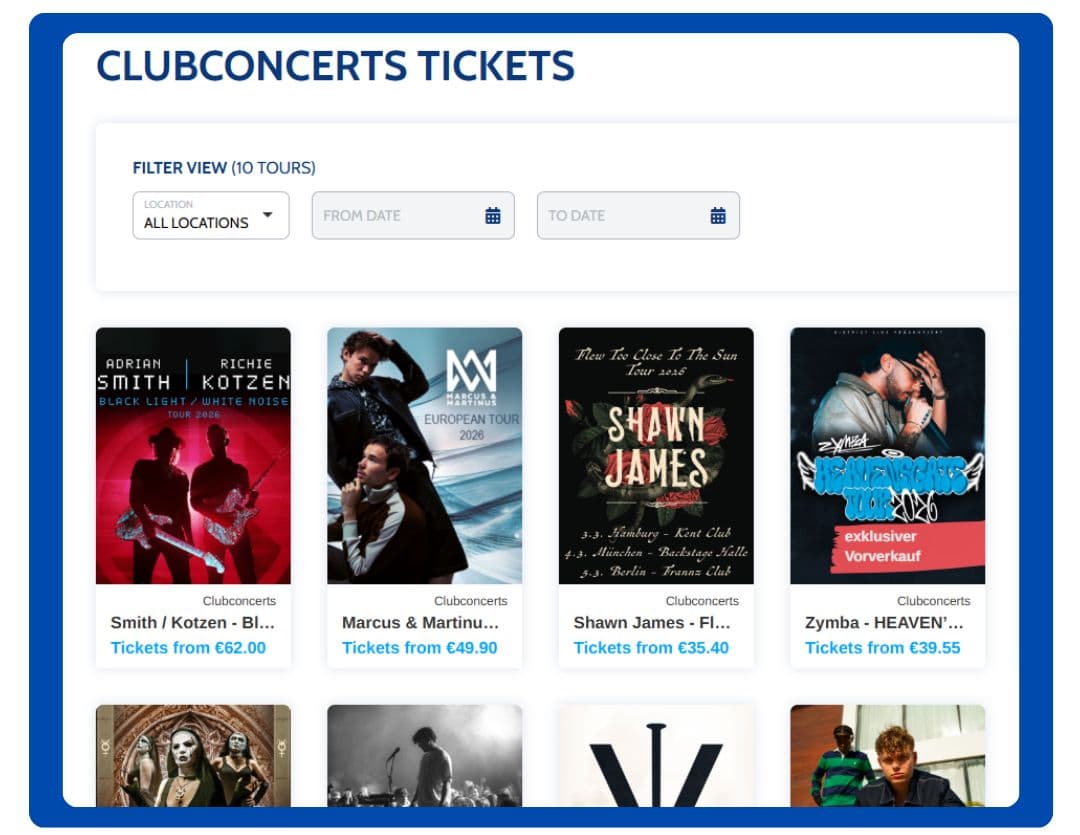
A well-defined process makes event data easier to collect and understand. When businesses scrape mytickets.de, they follow structured data collection workflows that focus on gathering public event details in a consistent format. This approach reduces confusion and keeps information easy to review. It also helps teams avoid random or incomplete listings that add little value.
By narrowing the focus to specific event types and locations, companies can scrape mytickets.de more effectively and collect data that supports real business goals. Over time, using scrape mytickets.de in a structured way helps businesses track pricing patterns, event demand, and changes across the event landscape.
Identify Relevant Event Pages
The first step is selecting the right event pages to collect data from. Businesses should focus on event categories, cities, or venues that match their research needs. This keeps the dataset focused and avoids gathering information that will not be used. Ignoring low-value listings also helps reduce errors and improve the overall quality of the data.
Select Required Data Fields
Once the right pages are chosen, the next step is deciding which details to collect. Common fields include event names and descriptions, dates, venues, locations, pricing, availability, and organizer or performer information. Selecting only essential fields keeps online ticket data extraction efficient and ensures the data collected supports meaningful analysis instead of creating unnecessary clutter.
Organize and Structure Event Data
After collection, data should be organized in a clean and consistent format. Structured datasets make it easier to compare events across locations and categories. Clear formatting also helps teams review data faster and prepare it for reporting or analysis without extra cleanup.
Ensure Data Accuracy and Consistency
Accuracy is critical when working with event data. This step includes removing duplicate records, fixing missing values, and verifying pricing and event details. Consistent data over time makes it easier to track trends and measure changes accurately.
Store Data for Analysis and Reporting
Finally, store the structured data so it can be used for ongoing analysis. Well-organized datasets support trend tracking, market research, and long-term planning. Reliable data storage allows teams to turn event information into insights that guide better decisions.
Business Use Cases of Ticket Data Scraping
Businesses use event information to make smarter decisions, not guesses. Ticket data scraping helps turn raw event listings into clear and usable insights. Instead of manually checking multiple event pages, companies can study pricing, availability, and event activity in one organized view. This supports data-driven strategies by showing what is happening in the market and where opportunities exist.
Analyze Pricing and Availability Trends
Event prices often vary by city, venue, and demand. By analyzing pricing and availability data, businesses can understand common price ranges across locations. This also helps identify high-demand events that sell out quickly or carry higher ticket prices.
Monitor Competitor and Event Landscape
Tracking event activity across platforms helps businesses understand the competitive landscape. Companies can see which venues host the most events and which organizers are most active. Comparing event frequency across regions also reveals where competition is strongest and where there may be room to grow.
Understand Audience and Demand Patterns
Event frequency and timing offer valuable clues about audience interest. By studying when events are scheduled and how often they appear, businesses can estimate demand levels. This also helps identify seasonal and regional trends that influence attendance and ticket sales.
Identify Emerging Event Opportunities
Looking at event data over time helps spot growing categories early. Businesses can see which event types are gaining attention and where new opportunities are forming. These insights support better planning and expansion decisions based on real market behavior rather than assumptions.
Contact TagX today for structured event and ticket data insights.
Challenges in Web Scraping for Ticketing Websites
Collecting event data at scale comes with several technical and operational challenges. Ticketing platforms often update their pages, add new events, or change layouts without notice. Because of this, web scraping for ticketing websites requires careful planning to ensure data remains accurate and consistent over time. Without a structured approach, businesses may end up with incomplete or unreliable information.
Some of the most common challenges include:
- Dynamic event listings and page layouts: Event pages can change frequently, which makes it harder to collect data in a consistent way.
- Large volumes of event data: Popular platforms list thousands of events, requiring careful organization and processing to manage the data effectively.
- Inconsistent formatting across listings: Different events may display dates, prices, or venues in different formats, making comparison more difficult.
- Maintaining long-term data consistency: Keeping data clean and comparable over time requires regular checks and standard formatting.
Understanding these challenges helps businesses prepare better and maintain reliable event datasets for analysis and decision-making.
How Scrape Ticketing Websites Support Market Research
Structured event data plays a key role in market research and analytics. When businesses scrape ticketing websites, they collect public event information in a clear and organized format. This makes it easier to review large datasets, reduce manual work, and generate insights faster. Organized data allows teams to focus on analysis instead of sorting through raw listings.
Compare Pricing Across Events
Structured pricing data helps businesses understand how ticket costs vary across the market.
- Compare prices by city and region
- Identify common price ranges for similar events
- Spot high-priced or low-priced events quickly
Evaluate Venue and Organizer Performance
Event frequency and activity reveal how venues and organizers perform over time.
- Track how often venues host events
- Measure organizer activity across locations
- Identify consistently high-performing venues
Detect Growing Event Categories
Event trends become easier to see when data is organized and reviewed regularly.
- Identify event types gaining popularity
- Track changes in event volume over time
- Spot early signs of audience interest shifts
Support Informed Planning and Strategy
Clear insights help businesses plan with confidence.
- Support data-backed planning decisions
- Improve pricing and event timing strategies
- Reduce risk by relying on real market data
Best Practices for Accurate Event Data Scraping
Accurate event data starts with clean and well-structured datasets. When information is organized clearly, businesses can analyze it faster and with fewer errors. Structured data makes it easier to compare events, review pricing, and track changes over time without confusion.
Maintaining consistency across events and regions is also essential. Event listings may appear in different formats, especially across cities or venues. Standardizing fields such as dates, locations, and pricing helps ensure fair comparisons and reliable analysis across all datasets.
Regular data validation improves reliability. This includes checking for duplicate entries, missing values, or outdated information. Validating data on a regular basis helps keep datasets accurate and useful, especially as new events are added or existing listings change.
Finally, scalability is key for long-term analysis. Event data often grows quickly, so datasets should be prepared to handle larger volumes over time. Scalable data practices allow businesses to continue tracking trends, studying demand, and supporting research without interruptions or quality issues.
Read also: Wildberries Scraper Guide: Collecting Product Prices, Reviews, and Listings
Legal and Ethical Considerations for Event Data Collection
Collecting event information should always follow legal and ethical standards. Businesses should focus only on publicly available information that is intended for general access. This ensures that data collection stays transparent and avoids crossing legal boundaries. Public event listings, dates, venues, and pricing details are typically safe to analyze when handled responsibly.
Respecting platform terms and guidelines is equally important. Every ticketing website sets rules for how its content can be accessed and used. Following these guidelines helps businesses avoid compliance issues when they scrape ticketing websites for research purposes. Ignoring such rules can lead to unreliable data access and legal risks.
Responsible data usage means using collected information only for research, analysis, and business insights. Companies should avoid misuse, reselling sensitive data, or misrepresenting event information. Proper online ticket data extraction also requires maintaining compliance with local and international data regulations, especially when working across regions.
Protecting privacy is critical. Businesses must avoid collecting personal or sensitive data and ensure that customer-related information is never exposed. Ethical data practices help build trust, support long-term research goals, and keep data collection safe and compliant.
Conclusion
Event and ticket data play an important role in helping businesses understand the market. Clear insights into event listings, pricing, venues, and availability allow companies to study demand, compare activity across regions, and plan with confidence. When this information is well organized, it becomes easier to spot trends and make informed decisions.
This is why many businesses choose to scrape mytickets.de for market research and analytics. By using scrape mytickets.de, companies can turn public event listings into structured and reliable datasets that support ongoing analysis. Clean data reduces guesswork and improves accuracy across reports and strategies.
TagX supports businesses by delivering professional event data services designed for research, planning, and analytics needs. With a strong focus on data quality and structure, TagX helps organizations make confident, data-driven decisions. Contact TagX today to learn how structured event and ticket data can support your business goals and market research efforts.