

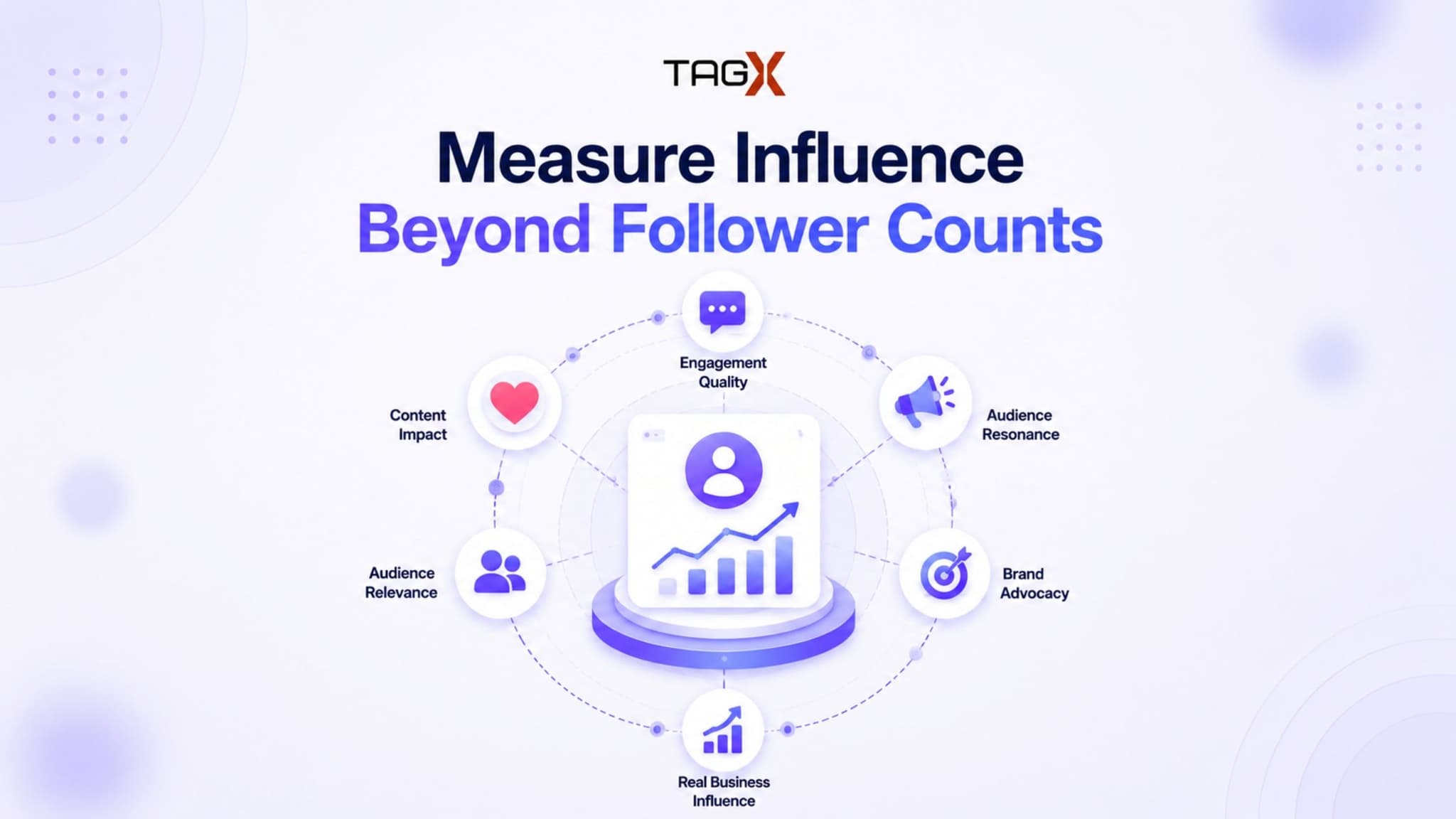
Influencer tracking starts with a simple question: who is actually influencing conversations around a topic, product, or category?
Answering that question requires more than looking at follower counts.
Social platforms contain millions of creators and accounts producing content across different subjects, locations, languages, and formats. Their activity changes constantly. New creators emerge, established accounts shift their focus, and engagement levels can rise or fall over time.
For brands, this makes influencer tracking less about manually checking profiles and more about working with the social media data behind those profiles.
By collecting information about creators, their content, engagement, topics, mentions, and activity, businesses can build a more measurable view of influence and understand how it changes over time.
What Is Influencer Tracking?
Influencer tracking is the process of collecting and monitoring information about influencers, creators, and other relevant social accounts over time.
The objective is not simply to identify popular accounts. Brands may also need to understand what a creator talks about, how frequently they publish, what type of engagement their content generates, which brands or products they mention, and whether their activity is relevant to a particular market.
Depending on the platform and available data, influencer tracking can include:
- Profile and bio information
- Followers and available audience signals
- Topics and keywords
- Hashtags and mentions
- Posting frequency
- Engagement metrics
- Content formats
- Brand and product mentions
- Location-related information
- Historical activity
When these signals are collected consistently, influencer research becomes easier to search, filter, compare, and monitor.
Instead of maintaining a static list of influencers, businesses can build an ongoing view of creator activity and the conversations surrounding a particular category.
Why Follower Count Doesn't Tell the Full Story
Follower count is one of the most visible influencer metrics, but it does not necessarily indicate how relevant or influential an account is for a specific business objective.
Two creators can have similar audience sizes while producing very different results. One may consistently publish content around a niche subject and generate strong engagement, while another may have a larger but less relevant audience.
Looking at multiple signals provides more context.
| Signal | What it helps show |
|---|---|
| Followers | Potential audience size |
| Engagement | Audience interaction |
| Posts | Content activity |
| Posting frequency | Account consistency |
| Topics | Subject relevance |
| Hashtags | Recurring interests |
| Mentions | Brand and product associations |
| Location | Geographic relevance |
For example, a skincare brand may find that a creator with 100K followers generates more relevant conversations around skincare products than a creator with 500K followers who covers a much broader range of subjects.
This does not mean follower count is unimportant. It simply means that audience size is one signal among many.
For brands, a more useful question is often whether a creator has the right combination of audience, relevance, activity, and engagement for the objective being measured.
Finding the Right Influencers for a Brand or Topic
Influencer discovery becomes more useful when it is based on specific topics and social signals rather than generic searches for popular creators.
A brand entering the skincare market, for example, may want to identify accounts that consistently discuss skincare routines, product reviews, sunscreen, beauty trends, or specific product categories.
Social media data can help identify creators based on signals such as:
- Topics discussed frequently
- Relevant keywords
- Hashtags used
- Products mentioned
- Posting activity
- Engagement generated
- Content formats
- Geographic relevance
These signals can also help separate creators who consistently cover a topic from accounts that only mention it occasionally.
The same approach applies across industries. A travel company may track creators discussing particular destinations. A consumer electronics brand may identify accounts focused on smartphones, gaming, or wearable devices. A food brand may look for creators consistently producing content around recipes, restaurants, or specific food categories.
This makes influencer discovery more precise because the focus shifts from “Who has a large following?” to “Which creators are consistently relevant to this subject?”
Measuring Influence Through Content and Engagement
Once relevant influencers have been identified, brands need a way to evaluate their activity.
There is no universal metric that can define influence for every business. Instead, brands can combine several observable signals to understand how a creator performs within a particular context.
Useful measures can include:
- Average engagement per post
- Total engagement over a specific period
- Posting frequency
- Number of relevant posts
- Topic frequency
- Brand and product mentions
- Hashtag usage
- Video views
- Changes in engagement over time
Content-level data adds another important layer.
An account may describe itself as a technology creator, for example, but its recent posts may show that smartphones account for most of its activity. Another creator may cover technology less frequently but generate significantly more engagement around product reviews.
Looking at the actual content helps brands understand what an influencer is known for in practice, rather than relying only on profile descriptions.
This can also connect influencer activity with broader conversations about products, brands, and categories. For businesses looking beyond individual creators, social listening can provide a wider view of the conversations taking place across social platforms.
Comparing Influencers With Consistent Data
Once influencer information is collected in a consistent format, brands can compare creators using the same set of signals.
For example:
| Data Point | Influencer A | Influencer B | Influencer C |
|---|---|---|---|
| Followers | 185K | 142K | 210K |
| Average engagement | 3.8K | 5.1K | 2.4K |
| Posting frequency | High | Medium | High |
| Relevant posts | 72% | 84% | 51% |
| Video content | 72% | 48% | 81% |
| Brand mentions | 34 | 21 | 46 |
The comparison does not automatically make one creator better than the others.
Influencer A may offer a balance between audience size and activity. Influencer B may generate stronger engagement despite having fewer followers. Influencer C may produce more content and have a larger audience but lower engagement per post.
The right interpretation depends on what the brand is trying to achieve.
Consistent data simply makes these differences easier to identify. Instead of opening profiles individually and making subjective comparisons, businesses can evaluate accounts using common fields and criteria.
This can be particularly useful when the number of influencers being considered grows from a few profiles to hundreds or thousands.
How Brands Scale Influencer Tracking With APIs
For brands tracking hundreds or thousands of influencers, the challenge is not simply finding relevant creators. It is collecting, updating, and organizing influencer data consistently across multiple platforms.
Manual research can work for a small campaign, but it becomes difficult to maintain at scale. Profiles change, creators publish new content, engagement levels fluctuate, and an influencer’s content focus can evolve over time. APIs provide a more repeatable way to access available social media data programmatically instead of manually checking profiles and updating spreadsheets.
Depending on the platform and source, brands can collect information such as:
- Profile details, usernames, and follower counts
- Posts, captions, hashtags, and timestamps
- Likes, comments, shares, views, and other engagement signals
- Topics, keywords, brands, and products mentioned
- Posting activity and content frequency
This data can then be structured and connected to databases, analytics systems, internal applications, or other business workflows.
ListenX by TagX provides API-based access to structured social media data from supported platforms, giving brands a foundation for bringing social content and account-level information into their own workflows.
Regular API-based collection can also help brands keep influencer information current and identify changes in activity, engagement, topics, or brand mentions.
For a deeper understanding of the data workflow, explore how social media data can be collected, structured, and used.
Turning Influencer Tracking Into Ongoing Brand Intelligence
Influencer tracking becomes more valuable when it continues beyond the initial discovery of creators.
Social activity changes constantly. New accounts emerge, established influencers shift their content focus, engagement levels change, and new conversations develop around products and categories.
Regularly refreshed social data can help brands monitor:
- Emerging creators within a category
- Changes in influencer activity
- Shifts in engagement
- Changes in content focus
- New brand or product mentions
- Frequently discussed topics
- Changes in relevant hashtags
- Growth or decline in conversations
This makes influencer tracking useful beyond individual campaigns.
The same information can support market research, competitive intelligence, content analysis, creator discovery, and broader social intelligence initiatives.
For example, a brand could track creators discussing a product category, identify which topics receive the most engagement, monitor competitor mentions, and observe which new accounts are becoming increasingly active around the category.
The value comes from treating influencer activity as continuously changing social data, rather than as a one-time list of profiles.
Conclusion
Influencer tracking is ultimately about understanding influence through more than audience size.
Follower counts can provide a starting point, but brands need additional context to understand whether an influencer is relevant to a particular topic, how actively they publish, what type of engagement they generate, what subjects they consistently discuss, and how their activity changes over time.
By collecting and structuring these signals, businesses can identify relevant creators, compare influencers using consistent criteria, understand their content, and monitor changes across social platforms.
APIs can make this process more repeatable by giving businesses a structured way to collect social media data and connect it with their existing workflows.
For businesses evaluating different approaches, where to find APIs for extracting data from social media platforms can help identify suitable options for collecting social data.
The result is a shift from simply asking “Who are the popular influencers?” to asking a more useful business question:
“Which creators are influencing the conversations that matter to our brand, and how is that influence changing?”