

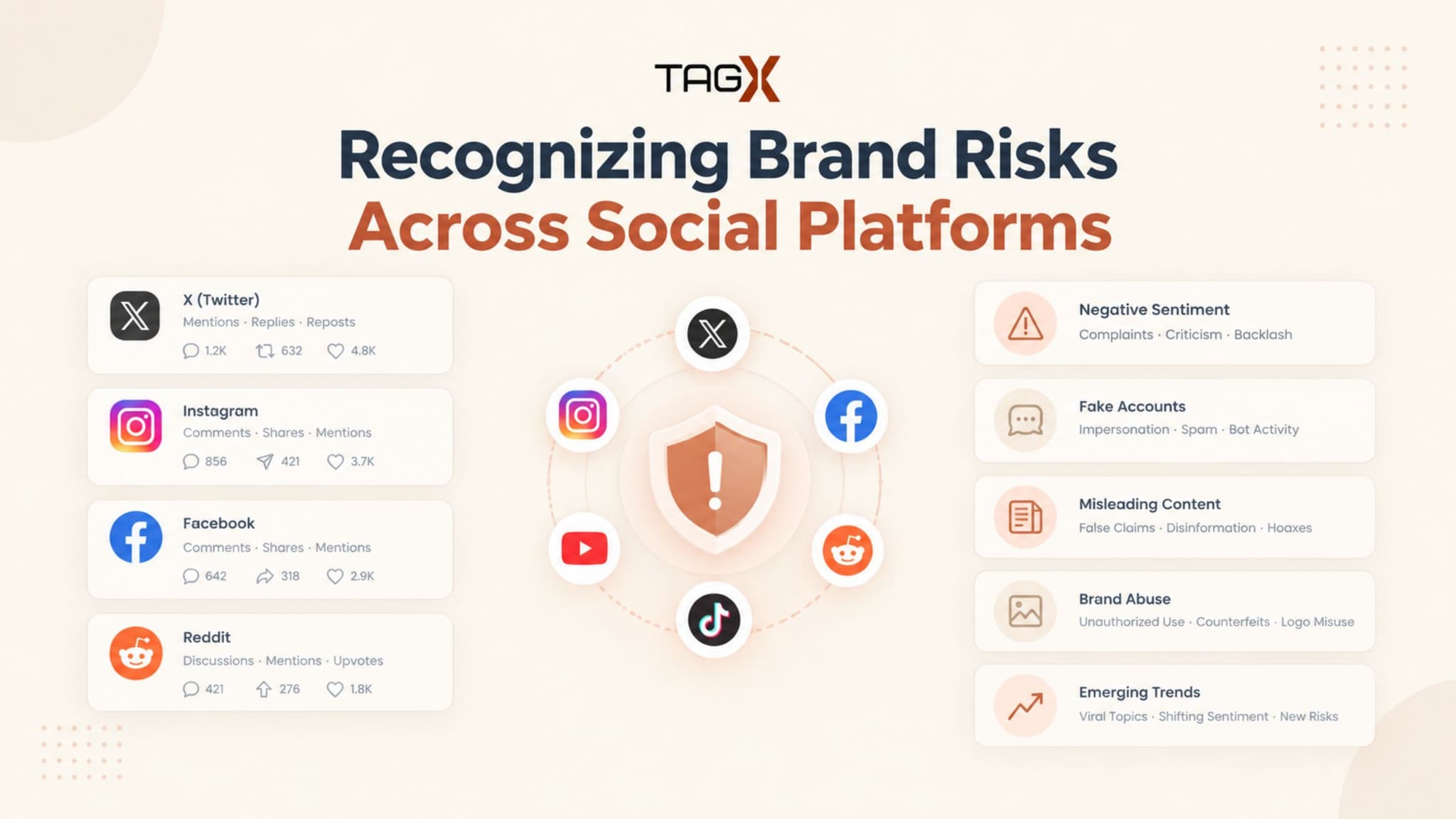
Brand identity goes beyond a logo, packaging, or product name. For retail brands, it also depends on how customers perceive products, discuss their experiences, and interact with branded content across social platforms. Fake accounts, misleading promotions, unauthorized use of brand assets, and negative customer conversations can affect consumer trust.
Social data helps businesses monitor their digital presence, identify potential brand misuse, and understand conversations that may influence their reputation.
As retail brands expand across social networks, manually tracking every mention, hashtag, post, and customer discussion becomes increasingly difficult. A Social Data API can help businesses collect relevant information from supported social platforms and deliver it in a structured format that existing monitoring tools can process.
This guide explores how retail brands can use social data to protect brand identity, what monitoring tools should track, and how businesses can build a more proactive brand protection strategy.
What Is Brand Identity Protection?
Brand identity protection involves maintaining a brand's authenticity, reputation, and consistent representation across the digital channels where customers discover, discuss, and engage with its products.
For retail brands, this means identifying potentially misleading content, monitoring unauthorized use of brand assets, and understanding how customers perceive their products online.
Several activities on social platforms can create brand protection challenges:
- Fake brand accounts: Profiles may imitate official accounts to mislead customers.
- Unauthorized use of brand assets: Logos, product photographs, and branded content may appear in unapproved promotions.
- Misleading product promotions: Posts may advertise counterfeit products or questionable offers using a brand's name.
- False product claims: Content may misrepresent product features, quality, or authenticity.
- Negative customer conversations: Recurring complaints can influence public perception and purchasing decisions.
- Impersonation and scams: Fraudulent profiles may use a brand's identity to direct customers toward suspicious websites or offers.
Not every unusual post or negative mention indicates misconduct. However, monitoring social data helps businesses identify patterns, review supporting evidence, and determine when further investigation is necessary.
Why Retail Brands Need Social Data for Brand Protection
Retail brands interact with customers across multiple social networks, where conversations can spread quickly and involve customers, creators, resellers, and other businesses.
Without consistent monitoring, teams may miss relevant discussions or discover potential issues only after they have gained attention. Combining social data monitoring with marketplace monitoring can provide a broader view of brand activity, including suspicious promotions, unauthorized sellers, and inconsistent product listings. Learn more in this guide to monitoring sellers, listings, and prices across marketplaces.
1. Monitor Brand Mentions Across Social Platforms
Customers may discuss a brand without tagging its official account. They might mention a product name, refer to a specific collection, or use a campaign hashtag.
Monitoring relevant public posts and mentions across supported platforms helps brands discover conversations they might otherwise miss.
Social data can help teams track:
- Brand names and product mentions
- Relevant hashtags and campaign discussions
- Public posts and comments, where available
- Mentions of specific products or collections
- Engagement signals associated with brand-related content
For example, a retailer launching a new product could monitor public discussions to identify questions about product authenticity, recurring complaints, or confusion about promotional offers.
2. Identify Potential Brand Impersonation
Fake profiles can imitate official brand accounts by copying logos, names, profile images, or promotional content.
These accounts may advertise suspicious offers, publish misleading information, or direct customers to unfamiliar websites.
Social data monitoring can help businesses identify profiles and posts that warrant investigation by tracking relevant brand terms, public content, and recurring patterns.
For example, a retailer may discover multiple public profiles using similar brand names and identical promotional images. Monitoring tools can flag these accounts for verification and potential reporting to the relevant platform.
3. Detect Misleading Promotions and Suspicious Offers
Social platforms are frequently used to promote products, discounts, and limited-time offers. Some promotions may misuse brand assets or make claims that the brand has not authorized.
Monitoring public promotional content can help teams identify:
- Unusual discounts advertised under a brand name
- Product promotions from unfamiliar accounts
- Posts using branded images without apparent authorization
- Suspicious links associated with branded offers
- Repeated promotional patterns across multiple accounts
These findings can help teams prioritize investigations. However, an unusual offer or unfamiliar account should not automatically be treated as fraudulent without further verification.
4. Track Customer Complaints and Emerging Concerns
Customer conversations often reveal potential problems before they appear in formal customer service reports.
Repeated discussions about product quality, packaging, authenticity, or misleading advertisements may indicate an issue that requires attention.
By collecting relevant public social media data, businesses can group conversations by product, keyword, topic, or brand. This helps teams identify recurring concerns and evaluate whether an issue is isolated or appearing across multiple communities.
What Is a Social Data API, and How Does It Support Brand Monitoring?
A Social Data API allows applications to retrieve supported social platform information through a defined interface. Depending on its capabilities and source coverage, it may provide access to public posts, brand mentions, hashtags, engagement signals, and other supported content.
For retail brands, an API-based approach makes it easier to incorporate social data into existing monitoring systems and investigation workflows.
Key benefits include:
- Consistent data collection: Retrieve relevant information from supported social sources.
- Centralized monitoring: Bring information from multiple sources into a common structure.
- Timely issue identification: Detects emerging conversations as new data becomes available.
- Workflow integration: Send collected data into existing monitoring applications and internal systems.
- Flexible tracking: Monitor selected brand names, product terms, hashtags, and keywords.
- Historical analysis: Compare collected observations over time when historical records are available.
For instance, a retail brand monitoring tool could collect public posts mentioning a product alongside branded promotional content. If several suspicious accounts begin advertising the same product using similar messaging, the system can help investigators identify connections and examine the available evidence.
API capabilities vary, so businesses should assess supported platforms, data fields, collection frequency, and applicable access restrictions before choosing a solution.
What Should Brand Monitoring Tools Track?
Effective social monitoring depends on collecting information that supports specific brand protection workflows. Rather than gathering everything available, businesses should focus on data that helps teams identify and investigate potential risks.
| Social data category | What to monitor | Why it matters |
|---|---|---|
| Brand mentions | Brand names, product names, and relevant keywords | Identifies conversations involving the brand |
| Hashtags and topics | Campaign hashtags, product discussions, and recurring themes | Helps track relevant public conversations |
| Account information | Public profile names and available profile details | Supports investigations into potential impersonation |
| Post content | Relevant public posts, captions, and comments where available | Helps identify misleading promotions or brand misuse |
| Engagement signals | Available likes, shares, comments, and other engagement metrics | Helps assess the reach of relevant content |
| Historical observations | Previous mentions, posts, and recurring patterns | Helps teams investigate changes over time |
Combining these data categories gives retail brands a broader view of how their identity is represented across social platforms.
For example, a brand mentioned alone may be harmless. However, when the mention appears alongside a suspicious promotion, copied brand assets, and a questionable external link, the combined signals may justify further investigation.
How to Build a Proactive Social Data Monitoring Workflow
Collecting social data is only one part of an effective brand protection strategy. Businesses also need a clear process for reviewing findings and deciding what action to take.
Step 1: Identify relevant social platforms
Select the platforms where customers discuss products, creators promote the brand, and potentially misleading content may appear.
Step 2: Define monitoring criteria
Establish the brand names, product terms, hashtags, keywords, and public account details that matter to the business.
Step 3: Collect and structure social data
Gather relevant information from supported sources and organize it into consistent fields that monitoring tools can process.
Step 4: Identify unusual activity
Compare new observations with known brand accounts, approved campaigns, historical records, and other available evidence.
Step 5: Prioritize potential risks
Evaluate findings using multiple signals rather than treating a single post, mention, or negative comment as proof of misconduct.
Step 6: Investigate and respond
Review the supporting evidence, document the findings, and report suspected impersonation or misuse to the relevant platform when appropriate.
Step 7: Refine monitoring rules
Use investigation results to improve keyword coverage, source selection, and alert criteria over time.
This process helps retail brands move from occasional manual searches toward a more consistent and scalable social monitoring approach.
Common Challenges in Social Data-Based Brand Monitoring
Although social data can improve visibility, several practical challenges can affect monitoring quality.
Incomplete Platform Coverage
Different social platforms expose different types of information. Businesses should prioritize relevant sources and understand the limitations of available data.
High Volumes of Irrelevant Mentions
Popular brands may receive thousands of mentions, many of which have little relevance to brand protection. Carefully selected keywords and monitoring rules help reduce unnecessary alerts.
Context and Interpretation
Sarcasm, jokes, customer criticism, and legitimate promotions can be mistaken for potential risks. Human review is important when interpreting ambiguous content.
False Positives
A similar-looking profile or unusually discounted product does not automatically indicate impersonation or fraud. Monitoring tools should support investigation rather than replace verification.
Data Access and Compliance
Collection practices must respect applicable laws, platform terms, privacy requirements, and access controls. Public availability does not automatically mean that information can be collected or reused without restrictions.
Addressing these challenges helps teams focus on relevant findings instead of large volumes of incomplete or misleading alerts.
Conclusion
Protecting brand identity requires visibility into how a brand is represented, discussed, and promoted across social platforms. For retail businesses, social data can help identify potential impersonation, investigate misleading promotions, monitor public brand mentions, and uncover emerging customer concerns.
A practical strategy combines relevant platform coverage, consistent data collection, structured information, and a clear investigation workflow. A Social Data API can make supported social information available to existing monitoring tools, helping teams evaluate potential risks using more complete and consistent data.
TagX provides managed external web and social data collection with structured data delivery to support business-specific requirements. From brand mentions and public social conversations to relevant engagement signals, the right data feeds can help existing monitoring tools gain broader visibility into a brand's digital presence.
Need social data for your brand monitoring workflows?
Contact Us to discuss your data requirements and explore a suitable data collection and delivery setup for your business.