


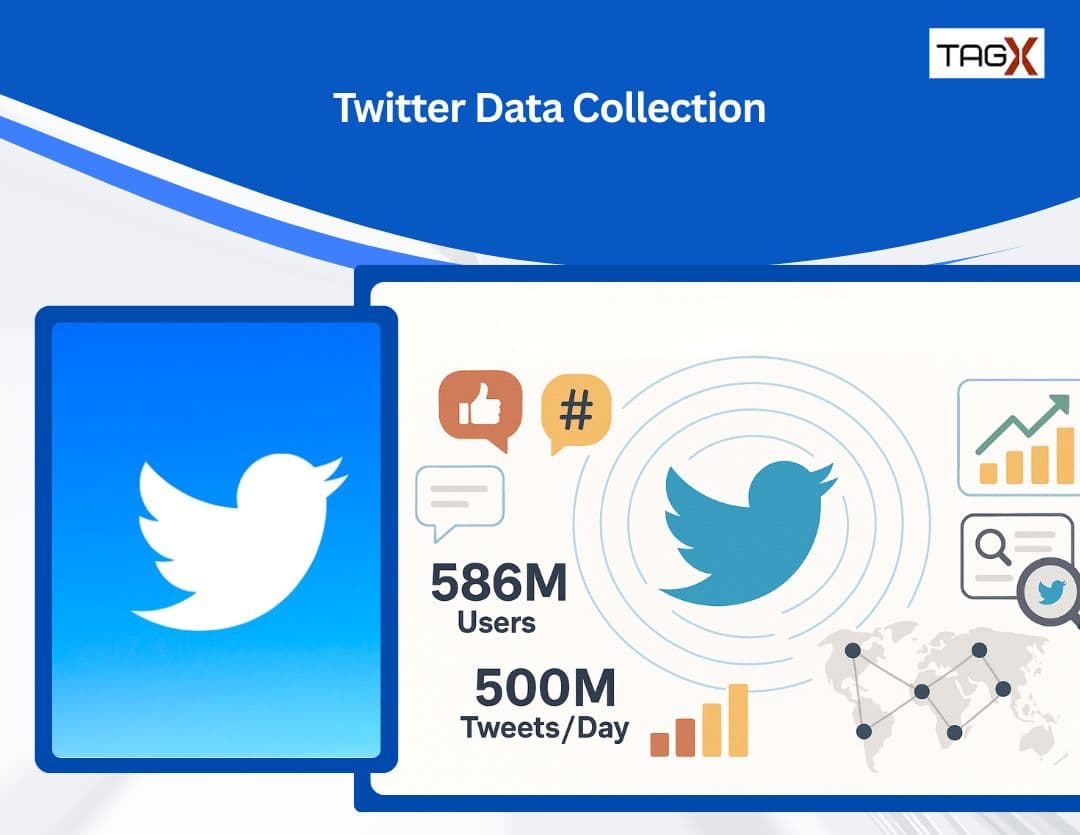
Did you know that over 450 million tweets are sent every day on X.com? Businesses are realizing that there is a goldmine of information hidden in these conversations. From customer feedback to trending products, the insights are endless, but only if you know how to gather and use them.
A Twitter Scraper helps companies collect this data in a structured way. By organizing tweets, hashtags, and user activity, businesses can spot trends, track competitor activity, and understand what customers really want.
For ecommerce brands, this kind of data is especially powerful. It can guide product launches, improve marketing campaigns, and even help plan pricing strategies. Marketing teams can also see what is working in real time and adjust their messaging accordingly.
In short, using a Twitter Scraper turns a huge amount of messy information into clear, actionable insights for smarter business decisions.
What Is a Twitter Scraper and Why Businesses Use It
A Twitter Scraper is a method that lets businesses collect structured data from X.com. Instead of sifting through millions of tweets manually, a scraper organizes the information so it can be analyzed and used effectively. This makes it easier for teams to turn raw data into insights that drive decisions.
Businesses use a Twitter Scraper for many purposes. For competitor research, it helps companies see what others in the market are doing and spot emerging trends. For product insights, it highlights customer opinions and preferences. Marketing teams can track hashtags and engagement to understand what content resonates with audiences. Ecommerce brands can also use the data to monitor demand, spot new opportunities, and plan campaigns more effectively.
By using a Twitter Scraper, companies can save time, reduce errors, and make smarter decisions based on reliable data from X.com.
Read more: Food Scraping: A Complete Guide to Collecting Food & Restaurant Data
Why Companies Need to Scrape Twitter Data for Market Intelligence
Companies today are sitting on a wealth of information on X.com, and learning how to scrape Twitter data gives them a major advantage. By collecting and analyzing tweets, hashtags, and engagement metrics, businesses can see what customers are talking about, what products are trending, and which marketing campaigns are working.
For marketing and ecommerce teams, the benefits include:
- Understanding audience interests – See what topics and content drive engagement.
- Tracking product demand – Monitor mentions and discussions to spot trends early.
- Improving marketing campaigns – Identify content that resonates and adjust strategies.
- Competitor insights – See how competitors perform and which campaigns succeed.
- Data-driven decisions – Turn scattered information into actionable insights quickly.
In short, the ability to scrape Twitter data allows businesses to make smarter decisions, run more effective campaigns, and strengthen customer connections.
How a Twitter Data Scraper Collects X.com Information
A Twitter data scraper is a service that helps businesses gather structured data from X.com efficiently. Instead of spending hours manually reviewing posts, companies can rely on professional services to collect, organize, and deliver the data in a way that’s ready for analysis.
These services focus on collecting the key types of information that businesses need, such as:
- Tweets and posts – Capture content relevant to products, brands, or industry trends.
- Hashtags – Track trending topics and popular discussions.
- User activity – Understand how users engage with content over time.
- Threads and conversations – Follow discussions to see what topics spark interest.
- Engagement metrics – Monitor likes, retweets, and replies for insight into audience sentiment.
Once collected, the data is structured and organized into easy-to-analyze formats. This allows teams to run analytics, track trends, measure campaign performance, and make informed decisions based on actionable insights.
Using a Twitter data scraper service ensures businesses save time, reduce errors, and access the data they need for smarter marketing, ecommerce, and competitive strategies.
How to Extract and Scrape Twitter Data for Business and Ecommerce Intelligence
Social media contains a lot of valuable insights, and X.com is no exception. Companies that know how to extract data from Twitter can use these insights to make smarter marketing and ecommerce decisions. By collecting structured information from tweets, hashtags, and user engagement, teams can track trends, monitor competitors, and plan strategies more effectively. Professional scraping services make the process efficient and organized, delivering clean data that businesses can use to drive growth.
Business-First Planning
Before collecting data, companies define their objectives. This step explains how to extract data from Twitter effectively to get meaningful insights.
Steps include:
- Define objectives – Competitor tracking, trend monitoring, product research, and ecommerce insights.
- Identify what to collect – Tweets, profiles, hashtags, and engagement metrics.
- Set goals for analysis – Decide how the data will be structured for dashboards, reporting, and business decisions.
Scraping and Data Collection Services
TagX provides professional scraping services that gather data from X.com at scale. This ensures companies get structured and actionable information without the hassle of manual collection.
How data is gathered:
- Target identification – Identify relevant accounts, hashtags, and conversations aligned with business goals.
- Automated scraping – Collect tweets, threads, profiles, and engagement metrics efficiently. This explains how to scrape tweets in a professional, service-based manner.
- Data structuring – Organize scraped data into spreadsheets, databases, or analytics-ready formats.
- Compliance – All scraping is done in accordance with platform policies and privacy standards.
Applying Data to Business and Ecommerce
Once the data is scraped and structured, companies can use it for real business value. This shows how businesses scrape Twitter data and extract it to make smarter decisions.
Applications include:
- Track product trends – Identify what topics or products are gaining attention.
- Optimize marketing campaigns – Adjust strategies based on audience engagement.
- Perform sentiment analysis – Understand customer opinions and reactions.
- Support ecommerce decisions – Inform pricing, product launches, and promotions.
Contact TagX today to access high-quality, structured Twitter data for your business.
Key Types of Data a Twitter Scraper Can Collect
A Twitter Scraper can provide businesses with a wide range of valuable information from X.com. The right data allows companies to understand audience behavior, track trends, and make smarter marketing and ecommerce decisions.
From individual tweets to engagement metrics, the data collected is structured in a way that makes it easy to analyze and apply for business growth. Understanding the types of data available helps teams prioritize what matters most for their campaigns and strategies.
Tweets and Conversation Threads
A Twitter Scraper can collect individual tweets as well as full conversation threads. This helps businesses understand which topics are generating discussion and what content resonates most with audiences.
Hashtags and Trending Topics
Tracking hashtags allows companies to identify trends, monitor campaign performance, and see which topics are gaining attention. Hashtag data is especially useful for marketing and ecommerce insights.
Profiles and Follower Statistics
Profiles and follower data provide information about key audiences and influencers. Businesses can use this to understand engagement patterns, identify potential partners, and monitor their competitors’ reach.
Engagement Metrics
Engagement metrics, including likes, retweets, and replies, give a clear view of how content resonates with users. This data helps teams measure campaign performance and make informed strategic decisions.
By collecting all of these data types in a structured format, companies can analyze trends, track performance, and apply insights to marketing, ecommerce, and competitive strategies.
How TagX Delivers High-Quality Twitter Data Services
TagX provides businesses with high-quality Twitter data services designed to turn social insights into actionable results. As a professional service provider, TagX does not rely on tools alone; instead, it offers structured, scalable, and compliant data collection from X.com. This ensures companies receive reliable data ready for analysis, reporting, and strategic decision-making.
A Twitter data scraper service from TagX gathers a wide range of information in a structured way:
- Tweets, threads, and conversations – Access content that matters for marketing and product insights.
- Hashtags and trending topics – Track discussions and trends relevant to your business.
- Profiles and engagement metrics – Understand audience behavior and measure content performance.
- Structured and scalable delivery – Data is organized for easy integration with dashboards, reports, and analytics tools.
- Compliant and secure – All collection follows platform rules and privacy regulations for safe usage.
These services are especially useful for:
- Marketing teams – Track trends and optimize campaigns.
- Ecommerce brands – Monitor product demand and customer preferences.
- AI developers – Use structured datasets for model training and analytics.
With TagX, businesses get more than raw data—they get actionable intelligence that drives smarter decisions and supports growth.
Compliance and Ethical Considerations When Using a Twitter Scraper
Using a Twitter Scraper responsibly is just as important as collecting data efficiently. Businesses need to ensure that all data collection follows platform rules, privacy regulations, and industry best practices to avoid legal and reputational risks.
To stay compliant, companies should always follow X.com’s terms and guidelines, respect user privacy, and focus on collecting only business-relevant data such as tweets, hashtags, and engagement metrics. Data should be used responsibly for marketing, ecommerce, or business intelligence purposes, and teams should maintain transparency about their data collection methods.
By adhering to these ethical practices, businesses can safely use a Twitter Scraper to gain valuable insights while staying within legal and ethical boundaries. This approach not only protects the company but also builds trust with customers and stakeholders.
Read also: Best Social Media Scrapers in 2026: Features, Pricing & Comparison Guide
Why Businesses Choose TagX for Twitter Data Collection
Businesses need accurate, reliable, and actionable data from X.com. TagX shows companies exactly how to extract data from Twitter and delivers it in structured formats that are ready for analysis. Using a Twitter data scraper, TagX helps marketing, ecommerce, and analytics teams focus on insights rather than manual data collection.
Reliable and Accurate Data
Companies trust TagX for precise Twitter data. Every tweet, thread, hashtag, and engagement metric is collected carefully, giving businesses the confidence to make informed marketing, ecommerce, and competitive decisions.
Ready-to-Use Datasets for Analytics
TagX delivers data in formats that are immediately usable for dashboards, reporting, or AI models. This structured approach saves time and accelerates decision-making by showing teams how to extract data from Twitter efficiently.
Scalable and Compliant Services
Whether small or large-scale datasets are needed, TagX’s services scale to meet business demands. All data collection follows platform policies and privacy standards, ensuring ethical and legal use.
Take the Next Step with TagX
Partnering with TagX gives access to high-quality Twitter data that drives smarter marketing campaigns, ecommerce strategies, and business intelligence. Contact TagX today to leverage a Twitter data scraper and turn insights into action.
Conclusion
A Twitter Scraper gives businesses the ability to collect structured data from X.com efficiently and strategically. By using professional scraping services, companies can scrape Twitter data to track trends, monitor competitors, and gain insights into customer behavior.
Structured Twitter data provides valuable business intelligence for marketing campaigns, ecommerce strategies, and overall decision-making. Teams can identify what content resonates with audiences, spot emerging product trends, and optimize campaigns based on real engagement metrics.
In today’s competitive landscape, leveraging a Twitter Scraper allows businesses to turn social media activity into actionable insights. From improving marketing performance to informing ecommerce decisions, the right data can be a game-changer. To learn how your business can harness these insights, contact TagX and explore professional Twitter data services designed to deliver reliable, structured, and actionable information.